Glass · ceramic coating
Glass ceramic coating
A professional-grade hydrophobic coating for shower screens, pool fencing and glass balustrades – water beads and sheets away, resisting soap scum, salt and mineral spotting, so glass stays clearer for longer. Applied on site, Noosa to Tweed Heads.
How it works
Chemistry, not elbow grease
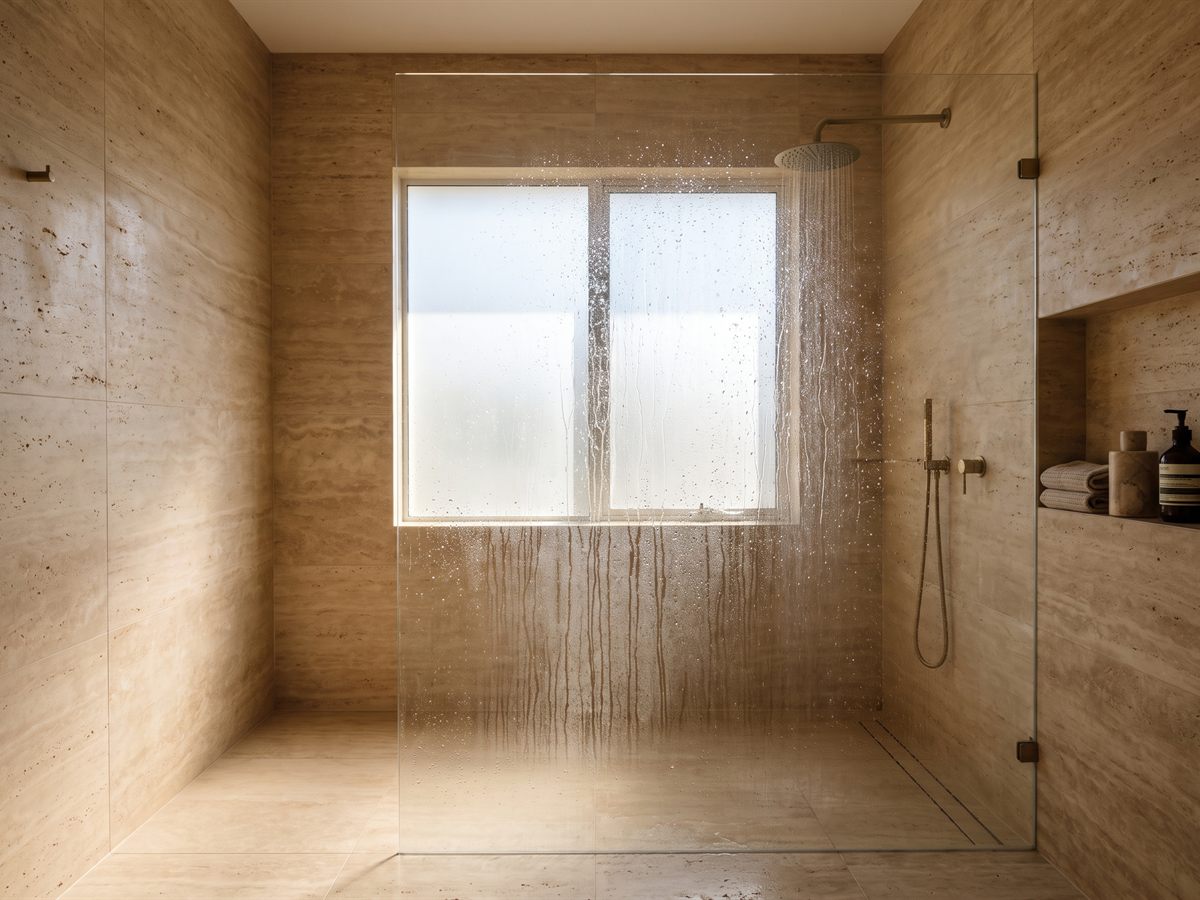
A liquid nano-ceramic layer is bonded to the glass itself – invisible once cured, and hydrophobic by design. Water beads and sheets off instead of drying in place, taking the minerals, soap and salt with it before they can etch or build up.
The result isn’t glass you never clean; it’s glass that cleans in a fraction of the time, with pH-neutral products and a squeegee doing the work harsh chemicals used to.
- LayerBonded nano-ceramic
- BehaviourHydrophobic
- ResistsSoap scum · salt · spotting
- AppearanceInvisible once cured
- CarepH-neutral · squeegee
Applications
Built for the hardest-working glass

Shower screens
The end of the daily soap-scum battle. Water sheets off after every shower, and a squeegee pass keeps the screen presentation-clear between proper cleans.

Pool fencing
Salt spray and chlorine mist are what turn pool glass cloudy. The coating resists both – a rinse after heavy exposure keeps frameless fencing looking frameless.

Balustrades & surrounds
Stair and balcony balustrades, wind breaks and pool surrounds – exterior glass that stays clearer through weather, sunscreen and salt air.
Aftercare
Simple care, honestly stated
Coated glass asks for very little: regular cleaning with pH-neutral products, a squeegee or towel-dry on shower screens, and a rinse for pool fencing after heavy salt or chlorine exposure. Avoid abrasives and strongly acidic or alkaline cleaners, and don’t let hard water repeatedly dry on any glass. The full guidance lives in our care instructions and comes with every handover.
Clearer in context
The glass you live with every day
Shower screens, pool fencing and balustrades each face a different mix of water, salt and daily use.
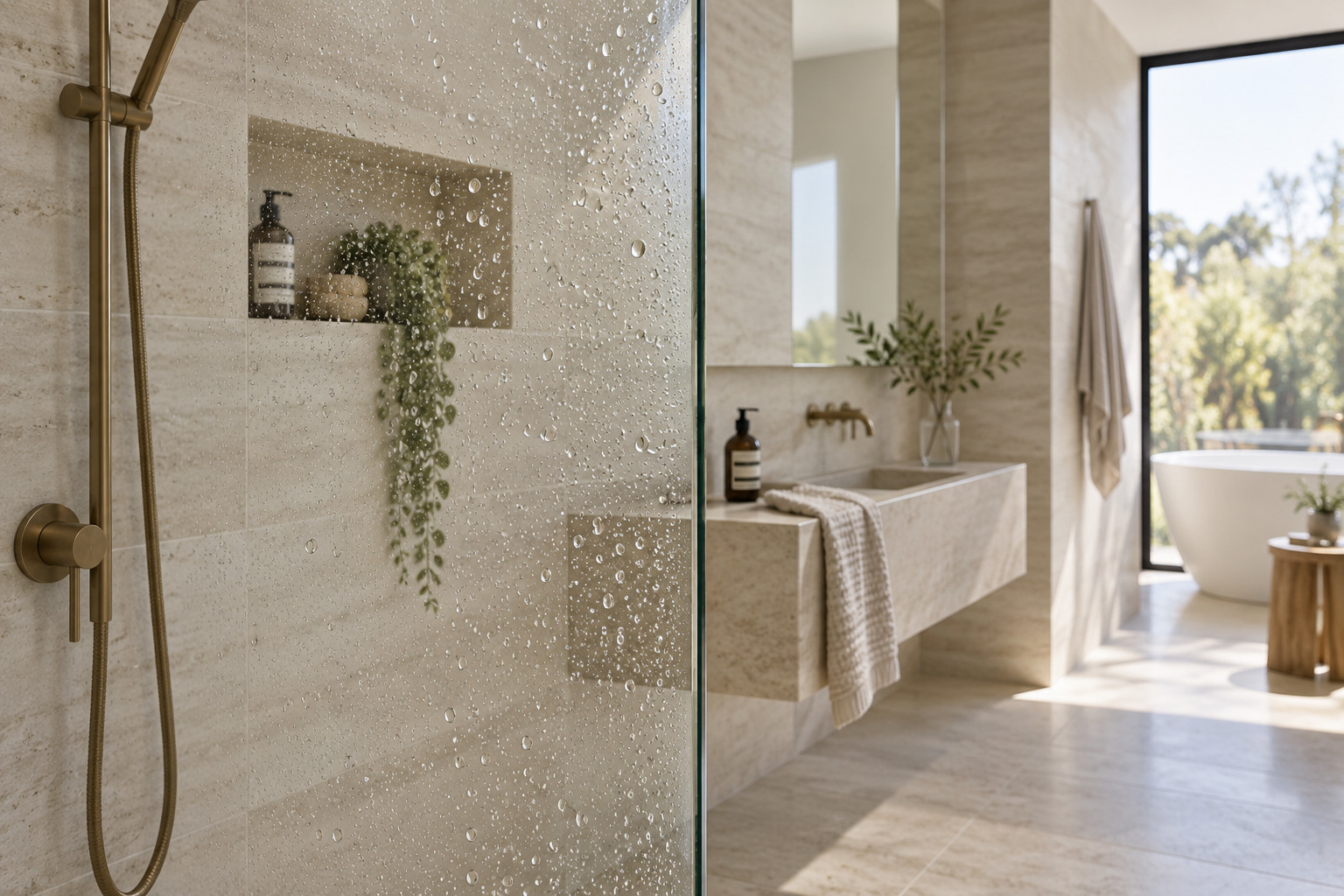
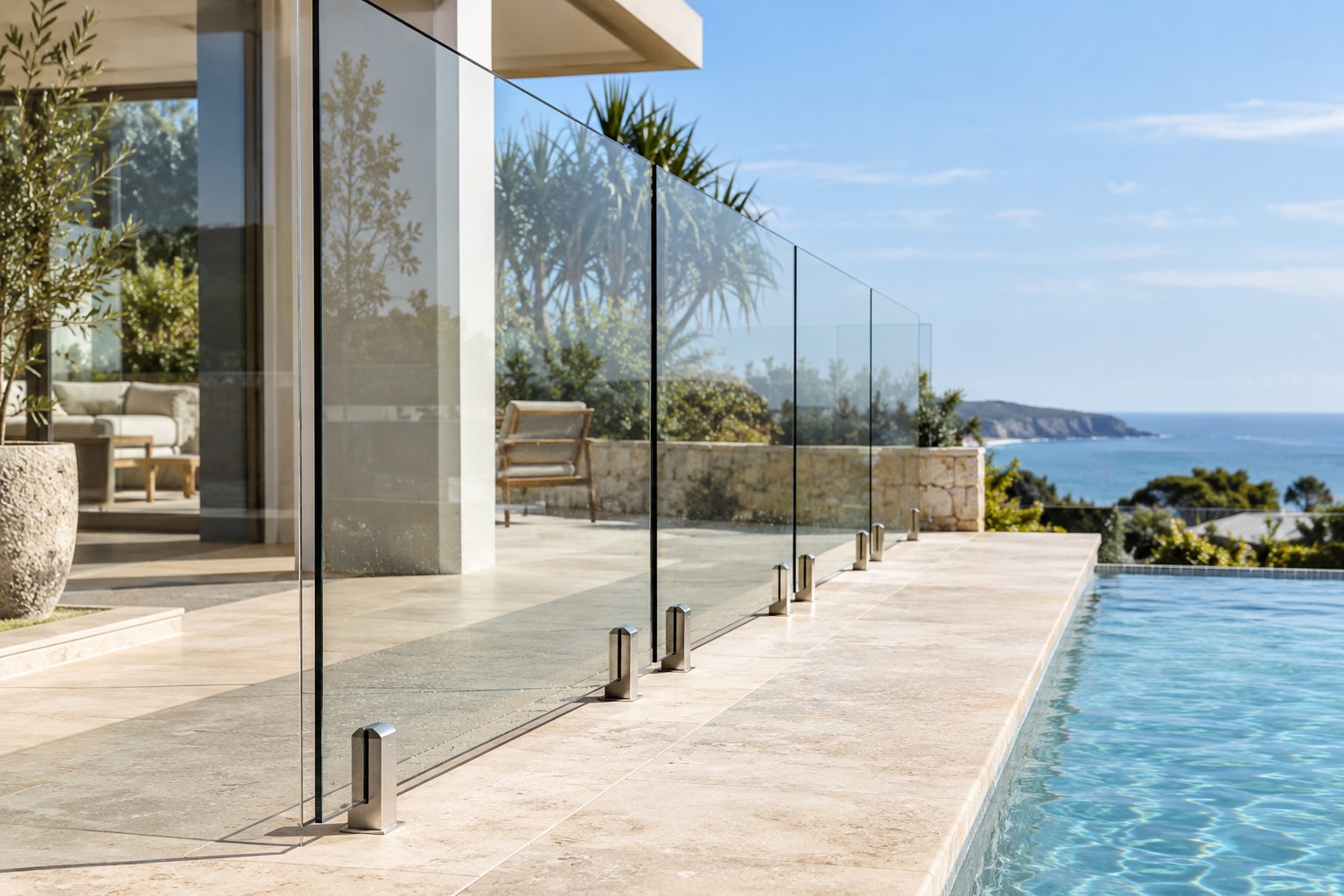
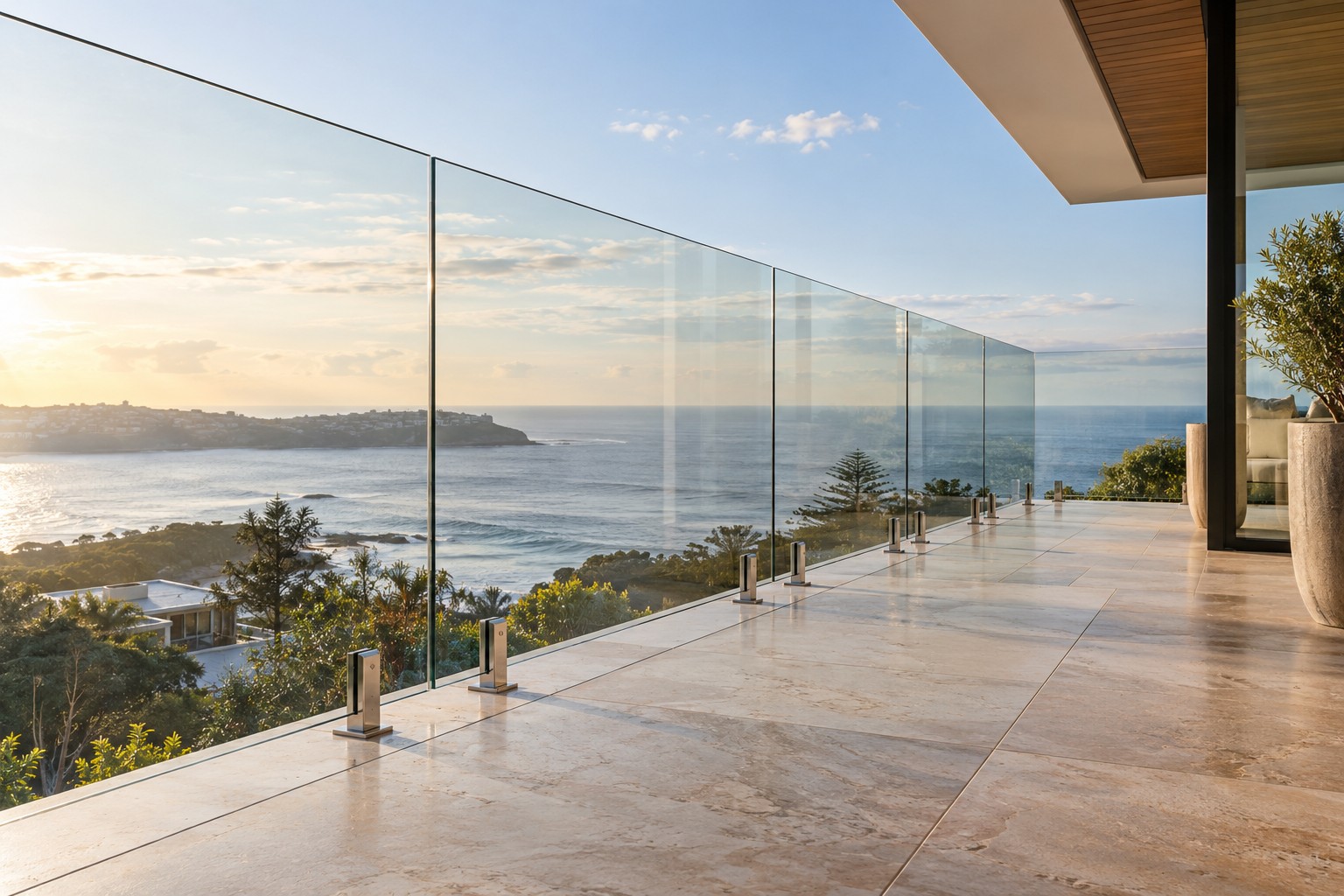
Hydrophobic performance depends on water quality, exposure and ongoing care.
Common questions
Ceramic coating, answered
How long does the coating last?
A professionally applied ceramic coating is designed to perform for years with correct care. Longevity varies with exposure – pool fencing in salt and chlorine works harder than an ensuite screen – so we advise a realistic maintenance rhythm for your glass at handover.
Is it a film or a coating?
A coating. Nothing is applied as a sheet – a liquid nano-ceramic layer is bonded chemically to the glass, completely invisible once cured, changing how the surface behaves rather than how it looks.
Will it remove existing water marks?
The coating protects forward. Glass is decontaminated and prepared before coating, which lifts surface build-up, but mineral etching that has already eaten into the glass may need professional polishing first – we assess this honestly at consultation.
Does it mean I never clean the glass?
Easier, not never. Soap scum, salt and grime release with pH-neutral cleaning and a squeegee instead of scrubbing and harsh chemicals – a fraction of the effort, on a longer cycle.
Also from Masori
The rest of the surface, handled
Stone · benchtops & walls
Stone benchtop protection
Self-healing protection film for marble, granite and engineered stone – kitchens, islands and feature walls.
Explore stone protectionGlass · interior tinting
Interior window tinting
Privacy, glare control and UV protection for internal glass – living rooms, studies and offices.
Explore window tintingRequest a quote
Clearly better glass.
Tell us about your screens, fencing or balustrades and we’ll prepare a tailored recommendation and quote – assessed at your address.
20% deposit secures your booking · balance on completion · progress payments on projects over one week